
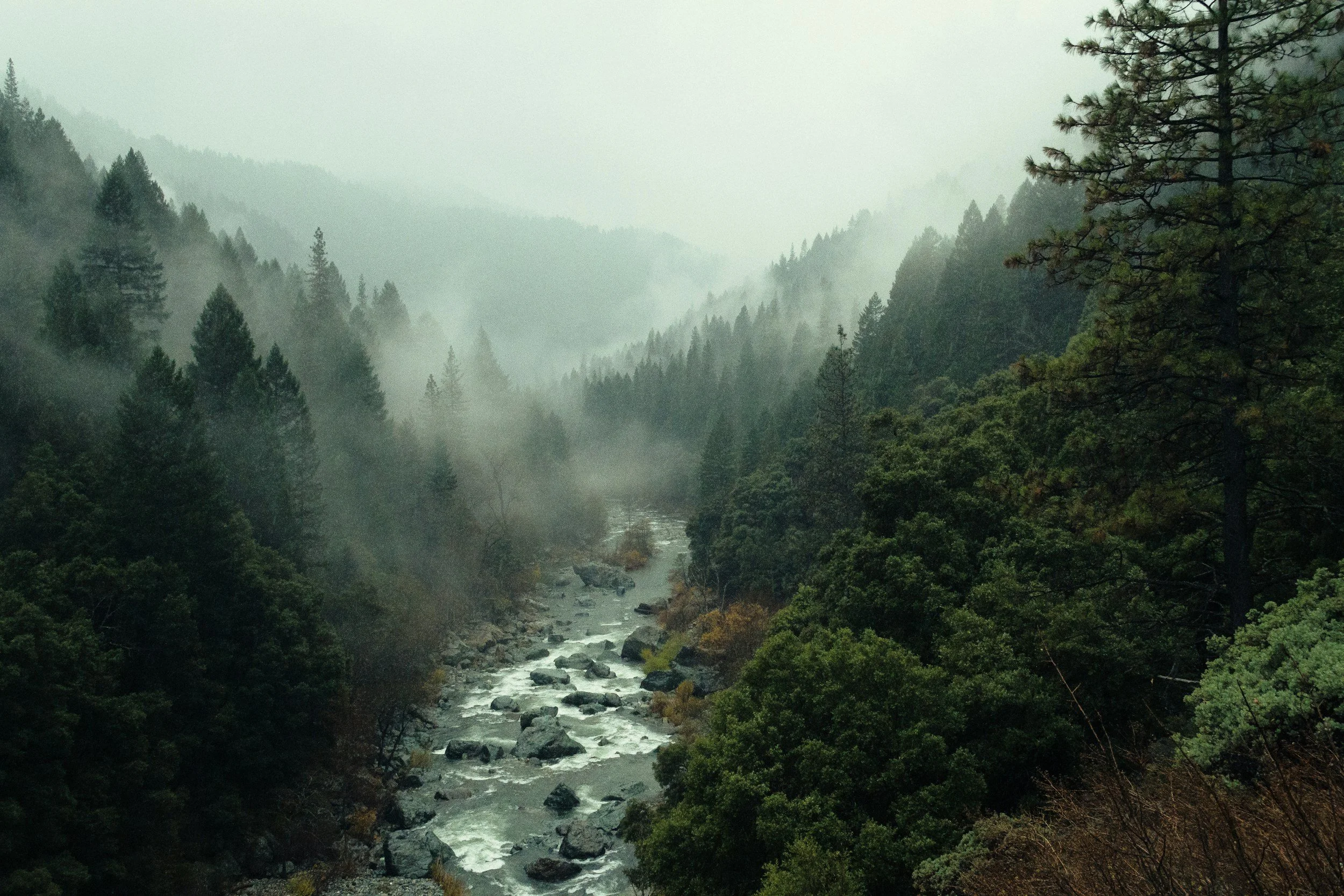
Our Work
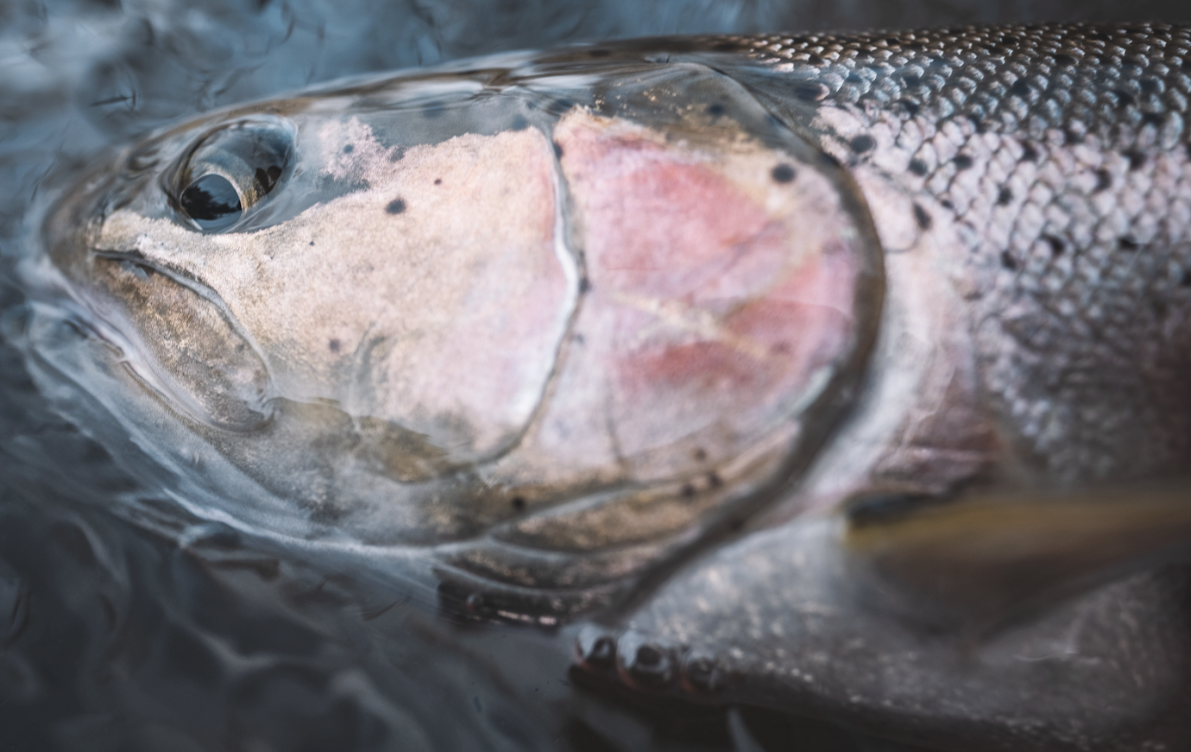
Steelhead are unique salmonids that have the potential to spawn and return to the ocean, at which point they are referred to as “kelts.” They can spawn and return to the ocean up to 5 times in their life, which makes the potential spawning output for each individual steelhead more prolific than that of other salmon species, which spawn only one time before dying. The freshwater life history of steelhead has been studied extensively, however the saltwater portion of their life history is under-studied, and may be different across regions (e,g, Alaska vs. Oregon populations).
Steelhead (Oncorynchus mykiss) are an extremely important species economically and ecologically. Thousands of anglers from around the world, and from local communities, visit the Pacific Northwest region annually to fish for steelhead. In Oregon, hundreds of fishing guides earn a living by taking clients out to realize their dream of catching one of these fish. This translates to significant tourism dollars coming into the state. Historically, steelhead were also important subsistence food and a cultural pillar for Native Oregonian tribes. Unfortunately, a sharp decline in steelhead numbers in Oregon has been observed over the past 50 years. Despite the decline, much of steelhead life history, and the factors that contribute to lower abundances, remain a mystery.
Background
Project Overview
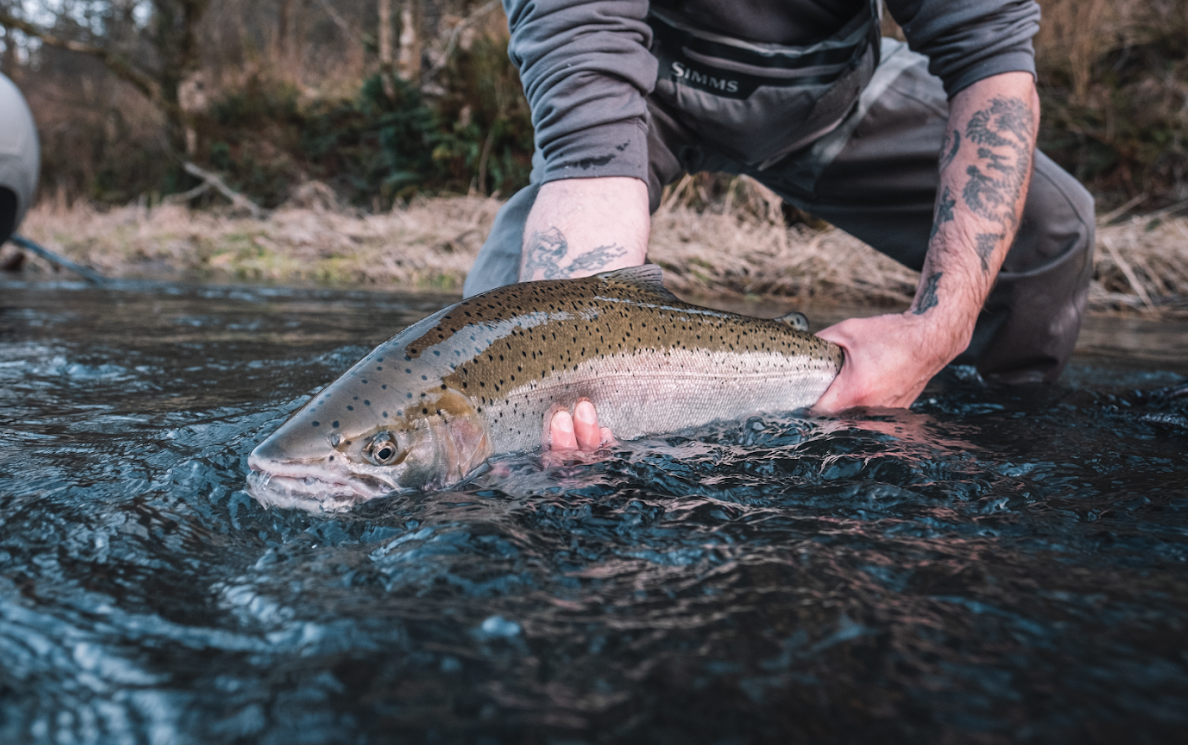
To address the scarcity of knowledge for Oregon steelhead populations, we are employing Pop Up Satellite Archival Tags (PSATs) to study the migration patterns and behavior of steelhead kelts from the Nestucca and Nehalem Rivers, two of the premier coastal fishing rivers in Oregon. In 2025, the first year of a planned multi-year effort, we attached seven PSATs to ocean-migrating kelts to track their post-spawning survival, collect information on saltwater migration routes, and assess water temperature and depth occupancy. We plan to repeat this study again
in 2026.
Map the migration routes of steelhead Kelts using satellite telemetry.
Determine the survivability and predation rates of Kelts during an ocean migration.
Assess the effects of climate change on migration behavior and habitat selection.
Objectives
Evaluate the impact of ocean dead zones on the health and survival of migrating Kelts.
Determine the rate of Kelting Steelhead by comparing catch rates of Kelts vs. Non-Kelts.
Educate fellow anglers on actions they can take to support a specific fishery.
Methodology
Hook-and-line survey
Fish are kept submerged eyes covered
Handling time is kept under 3 minutes
Expert local knowledge to land specimens
Fish Capture
Fish are placed in a padded PVC cradle with a damp eye cover; gills are irrigated with fresh water
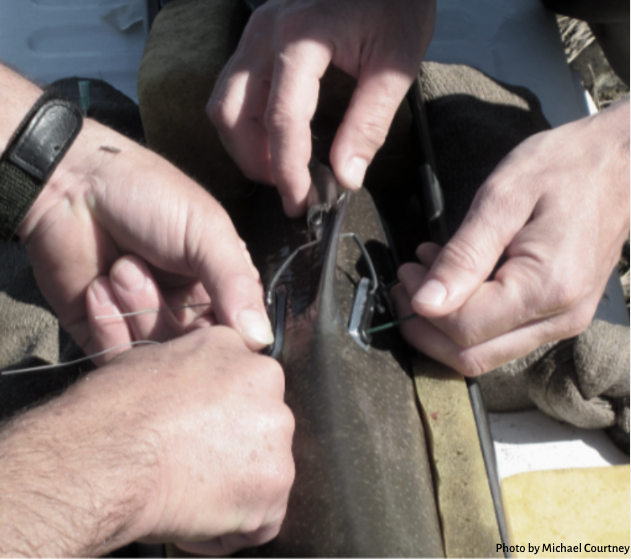
A satellite tag is surgically inserted just behind the dorsal fin following established protocols
Once the tag is applied, the fish are revived and released at capture site
Tag Procedure
Depth Archive (Pressure)
Temperature Archive
Light Archive
Acceleration
Light-Level Geolocation
(GPE3)Argos Locations
Tags detach after 60–180 days, transmitting data via satellite
Tag Function
Data Analysis
Data will be mapped using GIS software and reviewed for trends in survival, migration, and habitat.
Data interpreted by leading experts
See BOEM 2021 Steelhead Kelt Satellite Study - Courtne
Expected Outcomes
Community-based conservation model through citizen science.
Greater awareness and stewardship of Steelhead as a keystone species.
Economic and cultural benefits from sustaining coastal fisheries heritage.
Community & The Public
Community-based conservation model through citizen science.
Greater awareness and stewardship of Steelhead as a keystone species.
Economic and cultural benefits from sustaining coastal fisheries heritage.
Community & The Public
Community-based conservation model through citizen science.
Greater awareness and stewardship of Steelhead as a keystone species.
Economic and cultural benefits from sustaining coastal fisheries heritage.
Science & Conservation
Community-based conservation model through citizen science.
Greater awareness and stewardship of Steelhead as a keystone species.
Economic and cultural benefits from sustaining coastal fisheries heritage.